By Bob Partlow, FESS Board Member
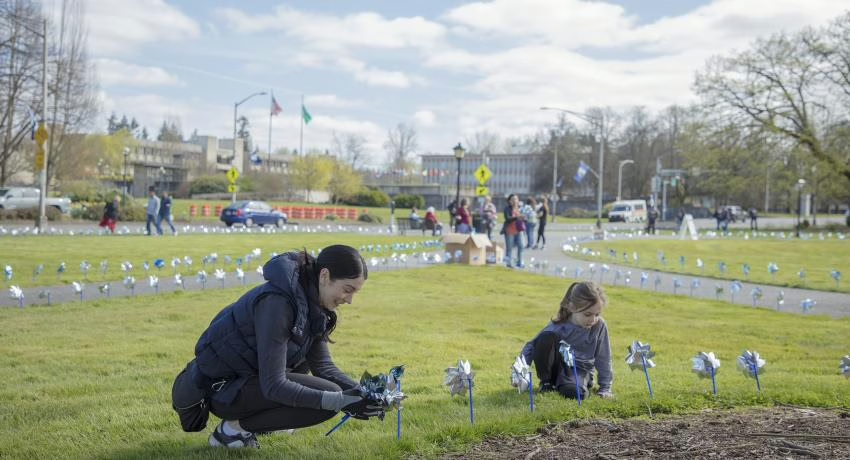
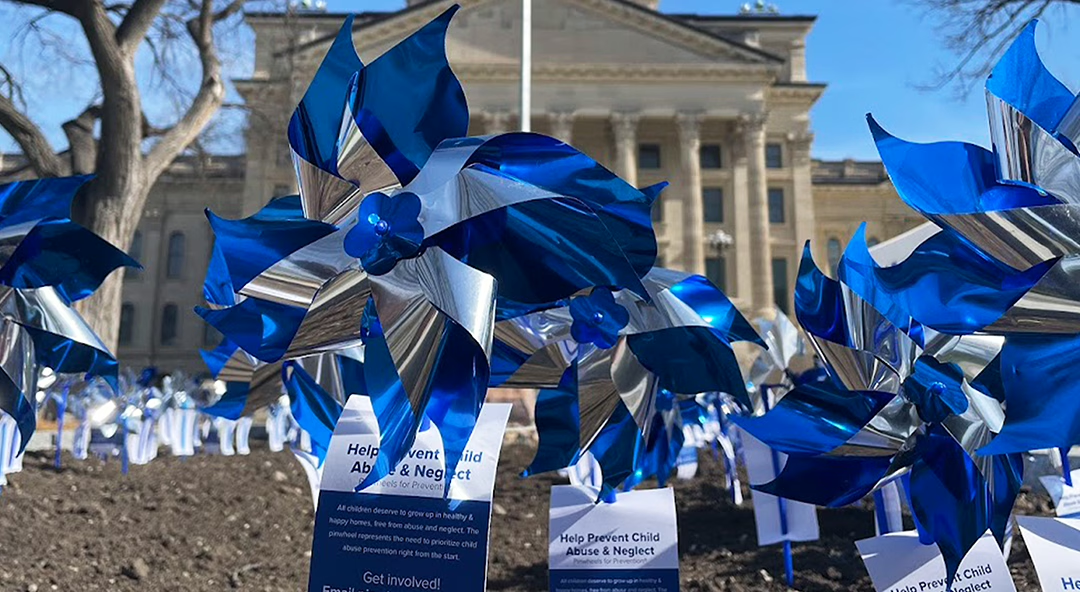
Drive or walk through the Washington State Capitol Campus this April and you’ll notice something special blooming around the Tivoli Fountain—a garden of bright blue pinwheels marking Child Abuse Prevention Month.
For the past 15 years, Family Education and Support Services (FESS) has partnered with state employees and community volunteers to plant these pinwheels as a visible reminder of our shared commitment to protecting children and strengthening families. Each pinwheel represents the belief that every child deserves a safe, joyful, and hopeful childhood.
Across the country, communities continue to work together to address child abuse and neglect. According to Prevent Child Abuse America, more than 550,000 cases of abuse and neglect are reported nationwide each year. In Washington alone, more than 166,000 calls regarding child safety were made in 2025, with about 60,000 resulting in face-to-face investigations. Advocates believe the true number may be higher, which is why continued awareness, prevention, and community support remain so important.
The pinwheel became the national symbol for child abuse prevention in 2008, chosen specifically because it reflects the joy, playfulness, and bright futures every child deserves. It replaced older, more somber imagery with a symbol rooted in hope and possibility.
For FESS Executive Director Shelly Willis, the pinwheels represent more than a symbol—they represent the children and families served every day.
“Every time I plant one, I think about the child it represents,” she says.
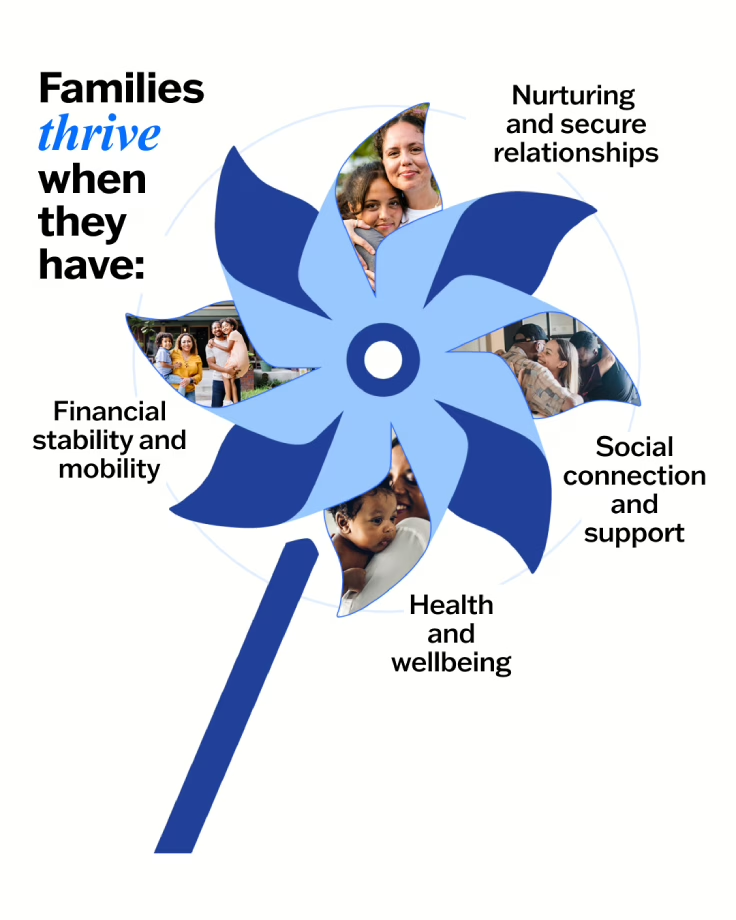
Based in Tumwater, FESS has spent more than 26 years building programs that help families thrive. Through services across four counties, the organization works alongside parents, caregivers, and communities to create environments where children feel safe, supported, and able to reach their full potential.
Through these programs, thousands of families have gained access to tools, resources, and support systems that help them build healthier, more hopeful futures.
These are the young people who shape our communities—children who fill our homes with laughter, challenge us to grow, and remind us every day of the incredible resilience of the human spirit.
Child abuse prevention is not limited to one community, background, or circumstance. It touches every corner of society, which is why prevention must be a shared responsibility. The pinwheel gardens across our state remind us that while the challenges are real, so too is our collective ability to create change.
Every volunteer who plants a pinwheel, every professional who supports a struggling family, and every community member who chooses to care becomes part of the solution.
Together, we become the living symbols of prevention—working to ensure that every child grows up safe, supported, and surrounded by opportunity.
While April is an important time to raise awareness, the commitment to protecting children and strengthening families continues year-round—365 days a year.