National Sleep Awareness Month
March is National Sleep Awareness Month and celebrated to promote the importance of healthy sleep. The 2026 theme is “Sleep Well, Live Better,” encouraging better more restful sleep.
Did you know that sleep disorders affect up to 45% of the world’s population, with less than one-third of sufferers seeking professional help? Yet we don’t need to know the statistics to enjoy a good night’s sleep. Here are some basic habits that will bring relief to any bedtime tossing and turning.
- Go to bed and wake up at the same time each day even on the weekends and avoid the snooze button on your alarm.
- Take a brief ten-minute walk outside in the morning rain or shine.
- Create bedtime rituals such as a warm bath before bed, reading a novel or writing in your journal and avoid blue light activities such as computer or cell phone usage.
- Keep your bedroom pleasantly dark and cool.
- Keep your dinner meal light and avoid all caffeine after 10AM. Avoid alcohol and nicotine products too.
- If you have personal habits that give you better sleep share these with others at the next Kinship Connection Meeting

Here is a helpful link from NIH:
https://www.nhlbi.nih.gov/health/sleep-deprivation/healthy-sleep-habits
As always, if you have questions, contact
Anatha Atthar, Kinship Navigator: anatha@familyess.org
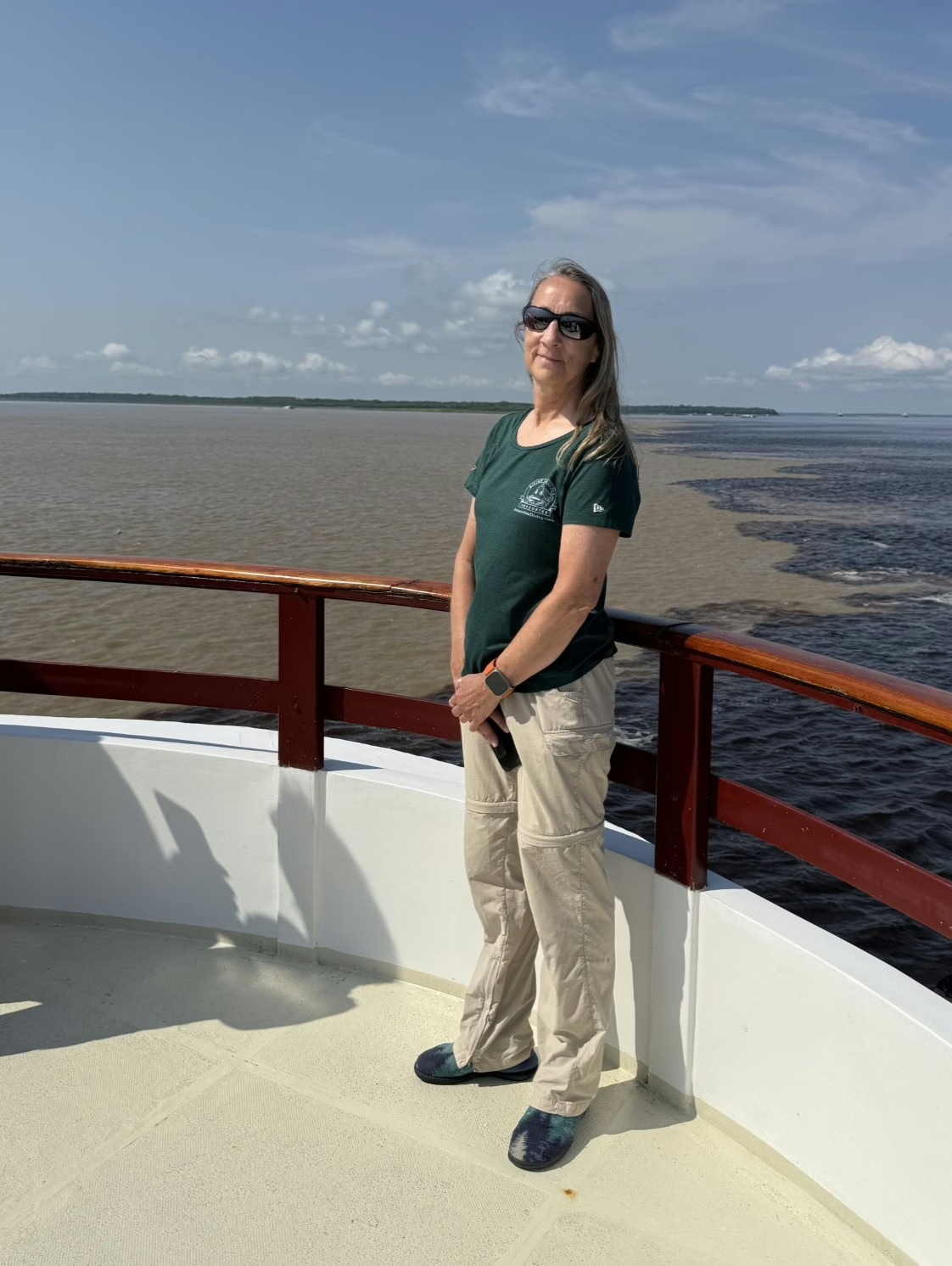
Meet Penny
Welcome Our New Kinship Navigator
Family Education & Support Services is excited to welcome Penny Michel as our new Kinship Navigator.
Penny is a Trust Based Relational Intervention (TBRI®) Practitioner with a background in trauma-informed, relationship-based work supporting caregivers and families. She previously worked with the Alliance, where she facilitated TBRI® classes, caregiver support groups, and trainings designed to equip caregivers with practical tools while fostering connection, reflection, and shared learning.
One of the trainings Penny taught was The Inherent Strengths of Kinship Care, a class developed by Dr. Joseph Crumbley that centers the resilience, cultural continuity, and protective strengths of kinship families. Through a partnership with Family Education and Support Services, Penny had the opportunity to offer this class to kinship caregivers connected to FESS—work that made joining the organization especially meaningful.
Penny has also worked with the state in foster care and early learning, supporting foster and kinship caregivers, adoptive families, and childcare providers as they navigated systems, requirements, and the day-to-day realities of caring for children. Across her work, she brings a strengths-based, collaborative approach grounded in honoring caregivers’ experiences and supporting families in feeling seen, capable, and supported.
Penny is grateful to be joining the FESS community and looks forward to connecting with kinship caregivers and community partners in her new role.